
A Parent's Guide to Raising Intuitive Eaters: Supporting Body Trust in a Diet-Obsessed World

To my nephew, and to all the children growing up in a world eager to tell them who they should be, may they know the boundless joy of being fully themselves. May food be a source of nourishment, connection, and delight rather than shame. May they feel at home in their bodies, move through the world with confidence and curiosity, and never forget that who they are is already more than enough.
For something we do multiple times a day, feeding children creates an unsettling amount of emotional weight.
Parents worry whether their child is eating enough, eating too much, getting enough variety, developing "good habits," or somehow falling behind because they have declared war on anything green this week. Beneath the logistics of lunchboxes and snack requests is a difficult question many parents struggle with:
Am I helping my child build a healthy relationship with food, or accidentally passing down the very struggles I've worked so hard to heal?
You might find yourself staring at a plate of untouched vegetables wondering if your child has consumed a single nutrient in the past forty-eight hours. You might hear your own parents' voices reminding you not to waste food, clean your plate, or "be careful" around certain foods. You might be trying to undo years of your own dieting history while simultaneously googling whether surviving on yellow foods for an entire week is developmentally appropriate.
Let’s be for real, parenting in a diet-obsessed culture is HARD!
Most parents I work with are not trying to raise children who count calories or fear dessert. It’s quite the opposite, they want their children to feel confident in their bodies, enjoy birthday cake without guilt, and grow up knowing that their worth extends far beyond their appearance. They want their children to be healthy, but they also want them to have body trust and food freedom.
What Is Intuitive Eating?
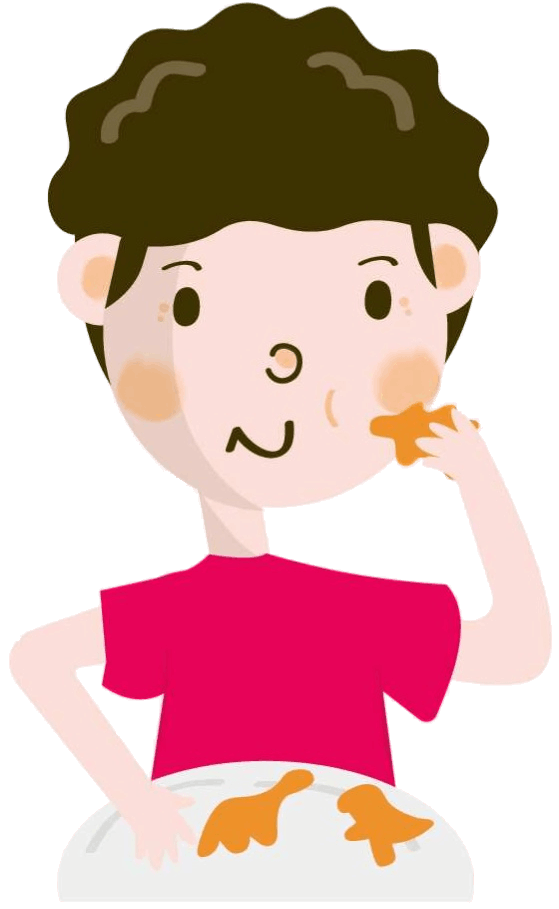
Simply put, intuitive eating is about trusting ourselves around food. It means paying attention to what our bodies are asking for, honoring hunger and fullness, noticing what feels satisfying, and making room for the reality that our needs change. Food nourishes us physically, but it also connects us to traditions, celebrations, comfort, and the people we love.
The interesting thing is that babies are born intuitive eaters and young children tend to be remarkably skilled at listening to their bodies. They may ask for seconds at dinner one night and barely touch breakfast the next morning. They may eat strawberries every single day for two weeks and then suddenly act as though strawberries have personally betrayed them. Kids’ appetites shift because children are growing, developing, and responding to their bodies' changing needs.
Somewhere along the way, many of us learn to prioritize external messages over our own internal wisdom. We are surrounded by messages about what we should eat, how much we should eat, and what our bodies should look like. Instead of building a relationship with our bodies based on trust and respect, we begin approaching them through the lens of control.
Helping children maintain body trust in a world that profits from body dissatisfaction is one of the greatest gifts we can offer them.
The Messages We Inherit About Food and Bodies
Many adults grew up with food rules that were considered completely normal at the time. If you grew up in an era when "nothing tastes as good as skinny feels" somehow passed as wellness advice, these messages may feel sadly familiar. Maybe you were expected to join the clean your plate club, perhaps dessert had to be earned by eating enough vegetables, maybe comments about weight were framed as concern, motivation, or even love. It is sad and disappointing how many adults can recall a story about being rewarded for losing weight. Over the years, clients have shared memories of being promised money, shopping trips (that goal outfit that haunted your dreams), vacations, and other meaningful incentives if they could hit that goal weight. While these offers were often made with love and concern, they frequently left behind complicated messages about worth, belonging, and what it meant to be enough.
Parents were likely doing the best they could with the information they had.
When we acknowledge the impact of these messages, the intention is not to blame previous generations but rather to understand the experiences that shaped our own relationships with food and our bodies. When we understand where our beliefs came from, we gain more choice in deciding what we want to pass on to our children.

Trusting Children's Natural Growth and Development
Children grow at varying rates, following their own individual growth curve, some have naturally larger appetites, some have smaller appetites, some are adventurous eaters, and others need more time and repeated exposure before trying new foods. The same is true of body size. Weight is not a behavior. Body size is influenced by many factors, including genetics, environment, developmental patterns, stress, medical conditions, and access to resources. In fact, body size and shape are mostly inherited.
This understanding allows us to move our focus away from trying to control children's bodies and toward supporting behaviors that contribute to overall well-being. We can teach kids to honor, listen to, and respect their bodies. We can talk more about who they are versus how they look, and help them understand that kindness, creativity, humor, and compassion matter more than their clothing size.
A Practical Framework: The Division of Responsibility
One of the most helpful concepts for parents comes from feeding expert Ellyn Satter and her Division of Responsibility. In simple terms, parents are responsible for deciding what foods are offered, when meals and snacks happen, and where eating takes place. Children are responsible for deciding whether they eat and how much they eat from what is provided. For many parents, this framework can provide some relief. Your role is to provide opportunities for nourishment and variety and your child's role is to practice listening to their body. Children (and adults for that matter) can only learn to trust their bodies when food feels reliable and consistently available. Meals and snacks must feel predictable, along with enough food to satisfy growing bodies, creating the safety that allows children to listen to internal cues. Scarcity, whether intentional or unintentional, can make that much harder. The gentle reminder here is that there should always be an abundance of food!
But What About the Chicken Nuggets?
At some point or another, nearly every parent wonders if their child has formed an exclusive relationship with exactly three foods (shout out to the OG mac and cheese). Social media has a funny way of convincing us that everyone else's child is happily eating cucumber flowers, rainbow bento boxes, and homemade energy bites while our own child is requesting their fourth peanut butter and jelly sandwich of the week. The reality is that children's food preferences often ebb and flow, repeated exposure makes a difference, pressure and food policing tends to backfire, and curiosity flourishes in environments that feel emotionally safe. Most of us (my fellow millennials and Gen-X’ers) were not raised on chia pudding and balanced snack plates. Somehow, despite a steady rotation of Lunchables, cereal commercials, and Capri Suns, many of us still eventually learned how to eat vegetables. Is it me or are we all now obsessed with brussels sprouts and avocados? A giant bowl of Fruity Pebbles still slaps too!
Offering familiar foods alongside new foods can support exploration without creating power struggles. Sometimes the broccoli gets ignored, sometimes it gets licked or passed to the dog, and sometimes it gets eaten six months after you had completely given up hope.
Remember that kids are self-regulating and to allow for autonomy!
Navigating Common Parenting Fears
Parents often worry that if they do not closely monitor their child's eating habits, something will go terribly wrong. What if they never eat vegetables? What if they eat too much sugar? What if they live in a larger body? These worries make sense. They are often rooted in love and a desire to protect our children.
All the while, overly controlling approaches to feeding can sometimes interfere with children's ability to trust their own cues. Predictable meals and snacks provide structure, variety supports curiosity, and emotional safety encourages flexibility. The goal is not to remove all guidance but instead offer guidance without shame.
If you have ever gone from "gentle parent" to "I just want to talk" in approximately 0.2 seconds after hearing someone made fun of your child's body, welcome to the club. Many parents worry that if their child lives in a larger body, they will become a target for bullies. Unfortunately, those fears are not entirely unfounded. Weight stigma exists and children can be unkind. As much as we wish we could bubble wrap our kids and follow them around the playground with snacks and affirmations, we cannot protect them from every painful experience.
What we can do is create homes where their bodies are not treated as problems. We can advocate when bullying occurs, take their experiences seriously, and remind them that another person's cruelty says nothing about their worth. Changing a child's body cannot guarantee protection from teasing. What often protects children most is knowing they have safe adults in their corner who believe them, support them, and love them exactly as they are.
When Diet Culture Enters the Conversation
Diet culture often shows up in childhood in subtle ways.
It can appear during pediatric appointments when weight is discussed without sensitivity or context. It can pop up in sports environments that equate thinness with discipline or success. It may come from relatives making comments about growing bodies or peers comparing appearances at school. Children notice these messages, even if they do not fully understand them, they absorb them like the precious sponges they are. This is why it is so important to create spaces where children can ask questions, express concerns, and receive reassurance that bodies naturally come in different shapes and sizes. Children deserve adults who help them make sense of these experiences without adding shame.
The Language We Use Matters
Instead of:
"You need to earn dessert."
"You've had enough."
"That's bad for you."
"Be careful or you'll gain weight."
Consider:
"Dessert is one of many foods we enjoy."
"Can you check in with your tummy and notice how it feels?"
"Different foods help our bodies in different ways."
"Bodies come in lots of shapes and sizes."
"You know your body best."
"I'm glad you're listening to what your body needs."
These changes help move children away from fear and toward awareness.

What Children Learn From How We Talk About Ourselves
Many parents work hard to avoid commenting on their child's body while speaking critically about their own. Again, children notice.
When they hear us describe ourselves as "bad" for eating certain foods or criticize our appearance in the mirror, they begin to soak up those messages about how bodies are supposed to look. This does not mean you have to love every aspect of your appearance every single day, body respect is often a more accessible goal than body positivity. Our children benefit from hearing us speak to ourselves with compassion. They benefit from seeing us nourish ourselves consistently, rest when we need to, and appreciate what our bodies allow us to do.
Supporting Health at Every Size
Promoting health behaviors and promoting weight control are not the same thing. Health-supportive behaviors might include eating regularly, moving in fun, enjoyable ways, getting enough sleep, managing stress, and being a good friend.
Weight is not a behavior.
Even when they are rooted in love and concern, attempts to change a child's body size will likely leave children questioning whether they are okay exactly as they are. Over time, this can erode body trust and complicate their relationship with food.
Children deserve care, support, and protection at every body size, their worthiness and lovability has never depended on their appearance.
Repair Matters More Than Perfection
If you have already found yourself thinking about comments you wish you had not made, take a breath. Every parent brings their own stuff into the room, every parent loses patience, and every parent misses the mark from time to time. Give yourself some grace, unlearning harmful food and body messages is hard work!
Repair matters more than perfection.
You can say:
"I wish I had handled that differently."
"I'm still learning too."
"I'm sorry I commented on your body."
"Thank you for telling me how that felt."
Children do not need flawless parents. They need parents who are willing to listen, reconnect, and try again.
The Gift of Body Trust
Imagine raising a child who can enjoy birthday cake without guilt. A child who notices when they are hungry and trusts themselves enough to eat, who moves their body because it feels good, not because they have to burn calories, a child who understands that appearance is one tiny part of who they are, and a child who knows they deserve kindness and respect regardless of what they weigh.
Hear me out, your child may still struggle sometimes. They will still grow up in a culture saturated with mixed messages about food and bodies.
But they will have something powerful to return to.
Trust.
The understanding that caring for their body and changing their body are not the same thing. The confidence to approach their body with curiosity instead of criticism. The understanding that their worth was never up for debate.
In a diet-obsessed world, helping a child maintain that connection may be one of the greatest gifts we can offer.
Not because it guarantees a perfect relationship with food.
Not because it protects them from every hard experience.
Because it reminds them of something that has been true all along:
Their body deserves respect.
They can trust themselves around food.
And who they are on the inside has always mattered far more than how they look on the outside!
If you're trying to raise children who trust their bodies, enjoy food without guilt, and feel secure in who they are, you do not have to navigate that journey alone. Therapy can help parents explore their own relationship with food, body image, and the messages they want to pass on to the next generation. If you're interested in building a more compassionate, connected approach to food and family life, reach out to learn more about working together at The Therapy Hub.