
Understanding the 4 Types of Emotionally Immature Parents
If you spend enough time on the internet, it can start to seem like every difficult parent is a narcissist and every complicated family interaction needs a clinical label and explanation.. Gaslighting was Merriam-Webster’s Word of the Year in 2022, which tells you something about how firmly therapy language has made its way into everyday conversation. Gaslighting is very real, and having language to recognize it has been important for many people. We’ve also reached a point where disagreement, defensiveness, remembering an interaction differently, or just being kind of an asshole can quickly get described as gaslighting. The internet can go from “my mom doesn’t apologize well” to“she is a malignant narcissist and I should never talk to her again” in roughly 30 seconds. The reality is that most relationships aren’t black and white. Sure, there are circumstances where creating significant distance or ending contact with a parent or loved one is the healthiest choice. For many folks, though, their relationship with a parent falls somewhere in the messy middle.
Having language for our experiences can be incredibly validating, especially when you’ve experienced complicated dynamics within your family of origin. In her book Adult Children of Emotionally Immature Parents: How to Heal from Distant, Rejecting, or Self-Involved Parents, psychologist Lindsay C. Gibson provides language for understanding some of the patterns that can develop when a parent struggles with emotional maturity. She describes four broad types of emotionally immature parents: the Emotional Parent, the Driven Parent, the Passive Parent, and the Rejecting Parent.
I want to be thoughtful about how we use these categories. Emotional immaturity exists on a continuum, and Dr. Gibson acknowledges that parents can show characteristics of multiple types or behave differently under stress (Gibson, 2015, pp. 69–70). Parents are also human beings shaped by their own families, relationships, culture, trauma, access to resources, and emotional development. These categories can help us make sense of familiar patterns without requiring us to diagnose our parents or conceptualize and interpret our entire childhood through this one lens.
You may read one of these descriptions and immediately recognize your family, or you may see pieces of your experience across several of the parenting types. Either way, what matters most is what these patterns can help you understand about your own experiences and how they may still show up in your life today.

What Is an Emotionally Immature Parent?
Emotional immaturity isn't a clinical diagnosis. In Dr. Gibson's framework, it describes limitations in a person's capacity for emotional intimacy, empathy, self-reflection, boundaries, accountability, and responsiveness to other people's emotional needs.
Across the four types, Dr. Gibson identifies common characteristics such as self-preoccupation, limited empathy, difficulty with boundaries, emotional reactivity, poor communication, and difficulty repairing relationships (Gibson, 2015, p. 79). Most of us will recognize some of these qualities in ourselves from time to time. We're looking at recurring relational patterns and the ways those patterns shaped the experience of being a child in that family.
As a kid, your family is simply your family. You aren't sitting at seven years old thinking, Interesting, my dad appears to have limited capacity for relational repair. Instead, you learn what works within your family. You notice what helps you feel connected, what tends to create conflict, and which parts of yourself feel easiest to express. Over time, you adapt to the relationships around you, and some of those patterns stick around into adulthood.
1. The Emotional Parent
Dr. Gibson describes Emotional Parents as being highly governed by their feelings. They’re also the most infantile of the four types. Their emotional states may shift quickly, creating unpredictability within the family. Children in these environments can feel as though they're “walking on eggshells” (Gibson, 2015, p. 71).
A child may become very good at reading the room. They learn to notice mom's tone when she walks through the door, dad's facial expression at dinner, or the subtle signs that tell them this probably isn't a good time to ask for something. They may also learn to soothe the parent, avoid upsetting them, or feel responsible for restoring peace when emotions become intense.
This early habit of monitoring other people's emotions can become a form of hypervigilance in adulthood. You might notice someone's expression change halfway through a conversation and immediately wonder what you did. You may feel anxious when someone you love is upset, rush to resolve conflict, or assume responsibility for making everyone feel okay. Dr. Gibson notes that children raised by Emotional Parents can become overly attentive to other people's moods because anticipating those emotional shifts was an important part of childhood (Gibson, 2015, p. 72).
As an adult, part of the work may involve learning that you can care about someone's feelings without becoming responsible for managing them.
2. The Driven Parent
The Driven Parent can be harder to recognize because this parent may look involved and supportive from the outside. They're often hardworking, responsible, goal-oriented, and invested in their child's future. Dr. Gibson describes Driven Parents as highly focused on achievement and improvement, with strong ideas about what their children should be doing and who they should become (Gibson, 2015, pp. 70, 73).
Involvement and high expectations aren't inherently signs of emotional immaturity. The difficulty arises when there isn't much room for the child's own preferences, temperament, values, or definition of a meaningful life. Dr. Gibson writes, “Goals take precedence over the feelings of others, including their children” (2015, p. 73). Paradoxically, these very involved, hardworking parents often end up with unmotivated, even depressed children.
If this was your parent, you probably knew when you'd done well. The harder question might be whether you ever felt like you’d done enough. When your choices didn’t align with what was expected of you, you may have been met with questions, criticism, or pressure to reconsider. Eventually, it can become hard to separate what do I actually want? from what will make them proud of me? You may still find yourself paying close attention to other people’s expectations and feeling most confident in yourself when you know you’re meeting them.
In adulthood, this can show up as perfectionism, achievement-based self-worth, difficulty resting, fear of disappointing people, or uncertainty about what you actually want out of life. You may accomplish something you've worked toward for years and give yourself approximately eleven minutes to enjoy it before deciding you should probably be doing something productive. You may also find that accomplishments don’t bring much joy at all because the goalposts have been moving since you could walk.
3. The Passive Parent
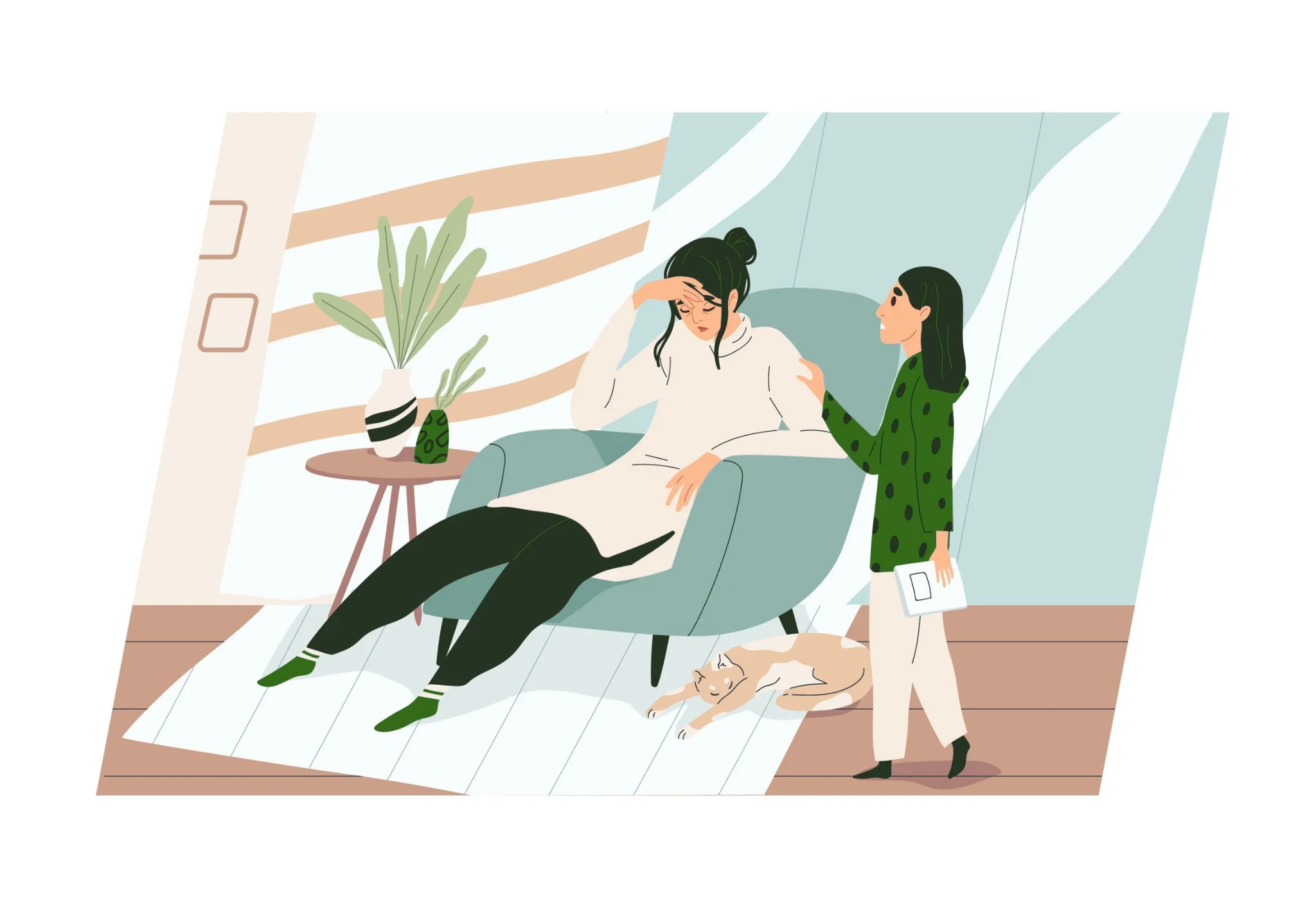
The Passive Parent can be particularly complicated to understand because this parent may have been the nice one. They may have been affectionate, funny, easygoing, or much easier to approach than another parent in the family. Those experiences can be genuine and important parts of the relationship.
Dr. Gibson describes Passive Parents as more emotionally available than some of the other types until situations become uncomfortable or intense. When conflict requires intervention, they may withdraw, minimize what's happening, defer to a more dominant partner, or try to keep the peace (Gibson, 2015, pp. 75–76). Dr. Gibson summarizes the painful limitation of this type simply: “They may love you, but they can’t help you” (2015, p. 75).
A child might receive comfort privately from this parent while watching them avoid confronting the person who caused the hurt. Maybe the Passive Parent told you not to make things worse, encouraged you to ignore someone's behavior, or acknowledged that something wasn't okay without stepping in. In some ways, they can become the family’s cleanup crew, offering comfort after the damage is done while leaving you wishing they had stepped in before the mess got so big.
This can become especially complicated in adulthood because people often feel protective of the parent they experienced as safer. I’ve heard clients say things like, “He was doing the best he could,” “Dad was the nice one,” or “He couldn’t stand up to Mom either.” There may be a lot of truth in those statements, while still leaving room for grief around the moments when you needed an adult to step in and advocate for you.
I appreciate Dr. Gibson’s identification of the Passive Parent because it gives us a way to look at the responsibility each parent held within the family. It’s easy to focus most of our attention on the parent whose behavior was more obviously hurtful, while overlooking the role of the parent who witnessed what was happening and didn’t intervene. Recognizing that role can help us move away from dividing parents into the “good one” and the “bad one” and toward a fuller understanding of what each parent was able, and unable, to provide.
4. The Rejecting Parent
Dr. Gibson describes Rejecting Parents as emotionally distant and uncomfortable with other people's needs. They may prefer being left alone and respond to attempts at closeness with irritation, dismissal, criticism, or disinterest (Gibson, 2015, p. 78). This is the type of parent who may leave you wondering, sometimes sadly, Why did my parents even want to have children?
Children are remarkably good at adapting to the emotional availability around them. If asking for help repeatedly creates irritation, you learn to ask for less. If emotional needs are dismissed, you may stop expressing and sharing your needs. Dr. Gibson writes that children of Rejecting Parents can come to see themselves as “bothers and irritants” and eventually stop reaching out for what they need (2015, p. 78).
As an adult, this may look like extreme independence or discomfort asking for support. You might rehearse a perfectly reasonable request ten times before making it, apologize for needing help, or decide that doing everything yourself feels easier.
Of course, being capable and independent can be wonderful qualities. It can also be useful to notice whether independence became the safest way to remain connected to other people. There is a meaningful difference between knowing you can take care of yourself and believing you should never need anyone else.
These Aren't Diagnoses or Neat Little Boxes

You may have reached this point thinking, Well, mine somehow managed to collect three out of four. Do not pass Go, do not collect $200, proceed directly to therapy. All jokes aside, these categories aren’t mutually exclusive. Dr. Gibson explains that parents can show characteristics of more than one type and may behave differently depending on the circumstances (2015, p. 70). You may recognize one type immediately, or you may recognize your experiences across several. Dr. Gibson explains that these types can overlap and that parents may display characteristics of another category depending on the circumstances (2015, p. 70). There’s no need to figure out which emotionally immature parent they’d be on a BuzzFeed quiz.
There's also value in being careful with diagnostic language. A parent who struggles with empathy, becomes defensive, avoids conflict, has difficulty apologizing, or behaves selfishly doesn't automatically have Narcissistic Personality Disorder. Dr. Gibson’s framework gives us another way to understand emotional limitations without needing a diagnosis to make sense of what we experienced.
You might get more information from asking yourself:
What happened when I was upset?
What happened when my parent was upset?
Could I disagree or have different values?
What happened when someone hurt someone else?
Were apologies and repair part of my family?
Could I ask for help?
Did I feel known as a person within my family?
Your answers to these questions can offer big insight into helping you better understand your childhood experiences as well as your ongoing needs in your adult relationships.
You Don't Need a Villain to Validate Your Experience
As an adult, you may have a clearer understanding of where some of your parents’ patterns came from. Maybe you’ve learned more about their childhoods, their relationships with their own parents, significant losses they experienced, or the emotional limitations you recognize in other members of your family (looking at you, one-upper uncle at Thanksgiving).
Dr. Gibson also gives us a glimpse into what may be happening internally for emotionally immature parents. She describes them as being driven by anxiety and insecurity, sometimes carrying an underlying fear that they are “bad, inadequate, or unlovable” (Gibson, 2015, p. 31). In other words, the parent who seemed overly focused on themselves may have been living with significantly more insecurity than their behavior suggested.
I think this is an important part of understanding emotional immaturity. It allows us to have compassion for the person underneath the behavior and recognize that many of these patterns developed many, many years before we entered the picture. It also gives us a fuller understanding of the relationship and why our parents may have responded to us in the ways they did.
You may have needed more room for your feelings, more encouragement and less evaluation, or a parent who stepped in when you needed protection and made it clear that you could turn to them for comfort.
Understanding more about what was happening for your parent can help explain their limitations. You still get to acknowledge what you needed from them and how their limitations affected you.
Learning more about our family relationships can help us get curious about what we learned about closeness, conflict, emotional needs, and what it meant to belong in our families.
Also, if you’re wondering how siblings can grow up in the same family and come away with completely different experiences, stay tuned. In the next blog, we’ll look at another part of Dr. Gibson’s framework: internalizers and externalizers, and how children can develop very different ways of coping while living within the same family dynamics.
Reference
Gibson, L. C. (2015). Adult children of emotionally immature parents: How to heal from distant, rejecting, or self-involved parents. New Harbinger Publications.
Understanding the patterns you grew up with can be an important part of understanding yourself as an adult. If family dynamics, boundaries, or childhood experiences are affecting your relationships today, therapy can offer a supportive space to explore those patterns with curiosity and compassion. Reach out to learn more about working with The Therapy Hub.